These days, having a ton of technology available on your wrist is nothing new. Several companies offer varying assortments of features in a watch-like package. And many of them are really, really ugly.
Garmin has quietly been making wrist-based sport computers like their Forerunner series that have blended outdoor tech for running, cycling/mountain biking or skiing and sport watches. The Forerunner series has morphed into more dedicated running models, and Garmin has added the Instinct series which melds some outdoor/adventure functions, bike computer functions, and new-school health tracking you’d expect from a modern wearable or smart watch.
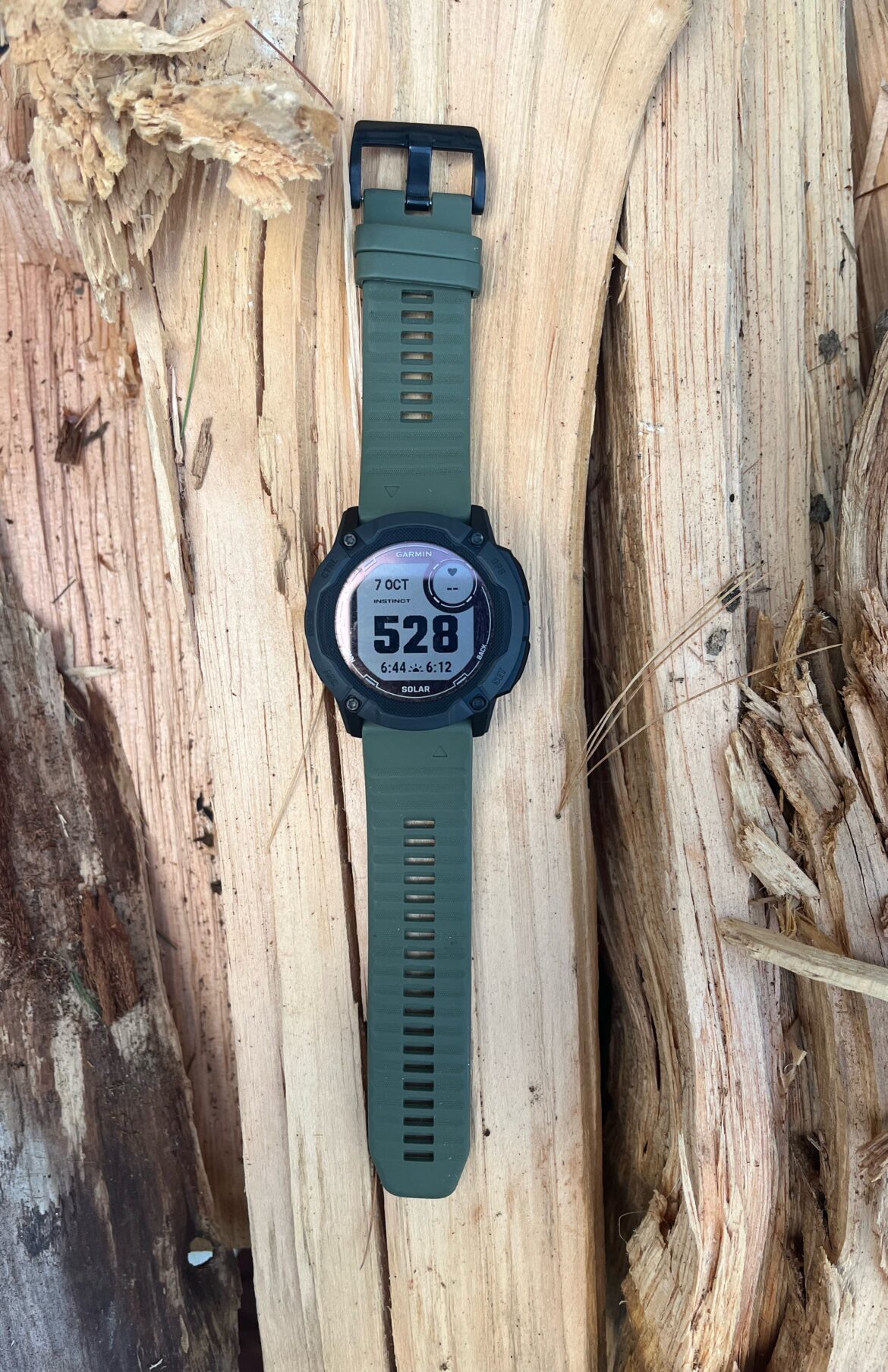
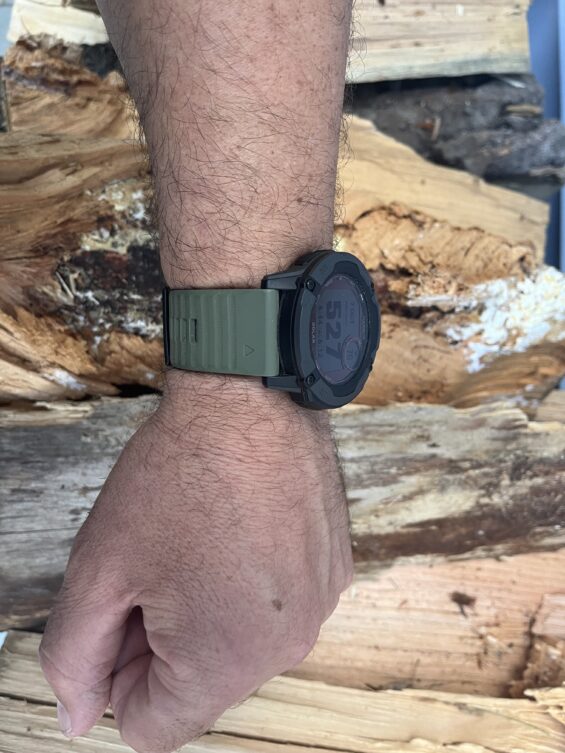
Recently, I’ve needed to pay more attention to my health, and given my overall satisfaction and familiarity with the Garmin Edge bike computers I decided to spring for a Garmin Instinct 2x Solar. It comes in three different case sizes- 40, 45, and 50mm. Since I’m a “more is better” guy I went with the 50mm.
Out of the box, the Instinct came fully charged and features menus and button layouts that are vaguely familiar from my years using Edge computers on my bikes. There are several different watch face options available, so I picked one that seemed innocuous and watch-like.
The “Solar” moniker refers to the fact that this watch can charge when exposed to sunlight, which is part of how it can manage to run for several weeks at a time on a single charge. Of course there are any number of factors that can affect battery life, but I’ve been pretty impressed with how long it runs on a single charge (which has been about 3 weeks on average).
In addition to all of the usual, modern cycling metrics (speed, time, distance, average speed, vertical gain, heart rate, etc.) it also has heart rate variability (HRV), training readiness, and a Garmin-only function called Body Battery. Body Battery essentially takes sleep quality, stress, and HRV to show you how ready you are for stress, which is a really helpful metric when juggling stress from work, life, and play.
The Instinct can broadcast your heart rate data from your wrist to your phone or a computer, like the Edge. That’s a nice feature if you’re interested in heart rate data and don’t want to wear the chest strap or forgot it at the trail head. The only downside is that to get accurate measurements the watch needs to be more snug than I’d like to wear it.
There is also a very useful flashlight feature that actually projects light (beyond the usual clock face illumination, which of course it also has).
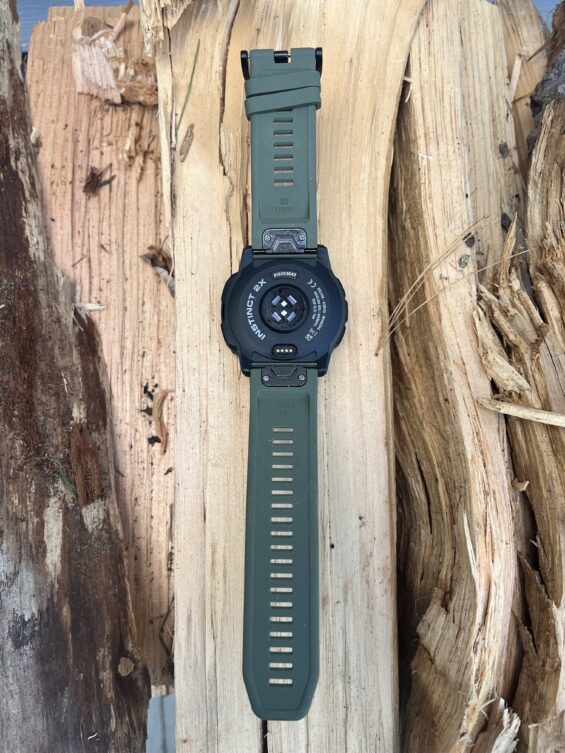
While it can serve as an all-in-one solution for bike computer, health tracker, and smart watch I’ve chosen to mostly use it for health tracking. It’s been roughly as accurate as my bar-mounted Edge, with the notable exception that the wrist-based heart rate lags behind the chest-strap (unless you snug down the strap). The large face also binds a little bit against the back of my hand when in the riding position on both flat and drop bars, but I have gotten used to it.
Of course you can have your wrist fully sync with your phone to keep you entirely connected, but I preferred to keep the notifications turned off, especially as I’ve chosen to wear it for collecting sleep data.
Overall I’ve been really happy with the Instinct 2x Solar, and it’s proven to add the right blend of data, utility, and battery life. The easy change straps are a simple and low cost way to mix it up when you wear it all the time (with some generic replacements available if you do some searching).